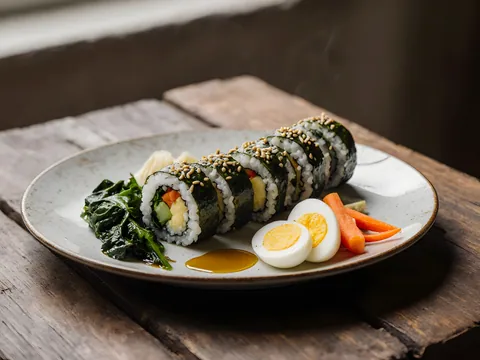
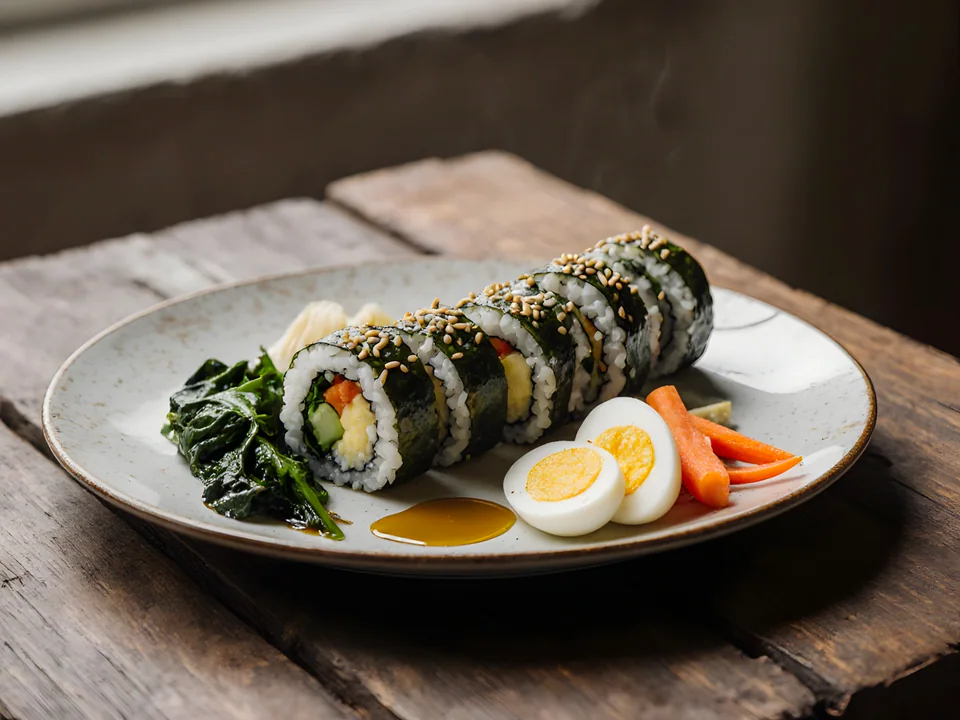
Sesame-seasoned rice wraps around crisp cucumber, tender carrots, spinach and strips of egg. Each seaweed roll slices into colorful, neatly packed rounds.
A thin layer of rice makes Kimbap easier to roll and leaves room for the contrasting fillings. The vegetables cook separately so the spinach stays green and the carrots keep a little bite instead of turning soft together.
Use short-grain rice and let it cool until just warm before spreading it on the seaweed. Squeeze the spinach thoroughly and keep the fillings in narrow rows so the roll closes without splitting.
Method
Combine rice and measured water in a saucepan. Bring to a simmer, cover and cook over low heat for until the water is absorbed. Remove from heat and rest, covered, for .
Meanwhile, bring a separate pot of water to a boil. Blanch spinach for until wilted, drain and cool under running water. Squeeze very dry, then season with 1 tsp sesame oil and 1/4 tsp salt.
Heat 1 tsp vegetable oil in a nonstick skillet over medium heat. Cook carrots with 1/4 tsp salt for until just tender; transfer to a plate.
Add the remaining vegetable oil to the skillet. Pour in eggs and cook over medium-low heat for , then flip and cook for until completely set. Slide onto a board and cut into long strips.
Fold 1 tsp sesame oil and the remaining 1/4 tsp salt into the cooked rice. Spread on a wide plate and cool for until just warm.
Place a nori sheet shiny-side down on a rolling mat. Spread a quarter of the rice thinly across it, leaving a 1-inch strip bare at the far edge. Lay a quarter each of the egg, carrots, spinach, cucumber and pickled daikon across the lower third.
Roll firmly away from you, using the mat to hold the filling in place. Dampen the bare nori edge with a wet fingertip and seal. Repeat, brush with the remaining sesame oil, scatter sesame seeds and slice with a damp sharp knife.
Forkue tips
- Wipe the knife between cuts instead of sawing through the seaweed; sticky rice on the blade can crush the next slice.
Storing and reheating
Best eaten the day it is rolled. Refrigerate tightly wrapped leftovers for up to 1 day; the rice firms in the fridge. Briefly pan-warm slices to soften the rice before eating.
Made it?
Tap a star to rate it. It helps the next cook decide.
Kitchen gear
Forkue may earn a commission from links on this page, at no extra cost to you.Nutrition per serving, estimated
Image: AI-generated picture of the finished dish, made by Forkue. Yours will look like home cooking.
Kimbap: FAQ
Can I use long-grain rice?
Short-grain rice is much better because its grains cling together. Loose long-grain rice makes the rolls difficult to seal and the slices likely to fall apart.
Why is my seaweed tearing?
The rice may be too hot or the filling too bulky. Let the rice cool until just warm, spread a thin layer and leave a bare strip for sealing.
How do I store and reheat Kimbap?
Best eaten the day it is rolled. Refrigerate tightly wrapped leftovers for up to 1 day; the rice firms in the fridge. Briefly pan-warm slices to soften the rice before eating.
How long does Kimbap take?
About 1 hr in total: 35 min prep and 25 min cooking.
What do I need to make Kimbap?
The key ingredients are short-grain white rice, sesame oil, nori, eggs, carrots and spinach, plus pantry basics.
Any tips for Kimbap?
Wipe the knife between cuts instead of sawing through the seaweed; sticky rice on the blade can crush the next slice.
Cook this next
 50 min
Korean · Dairy-free
Beef Bibimbap
 1 hr 3 min
Japanese · Pescatarian
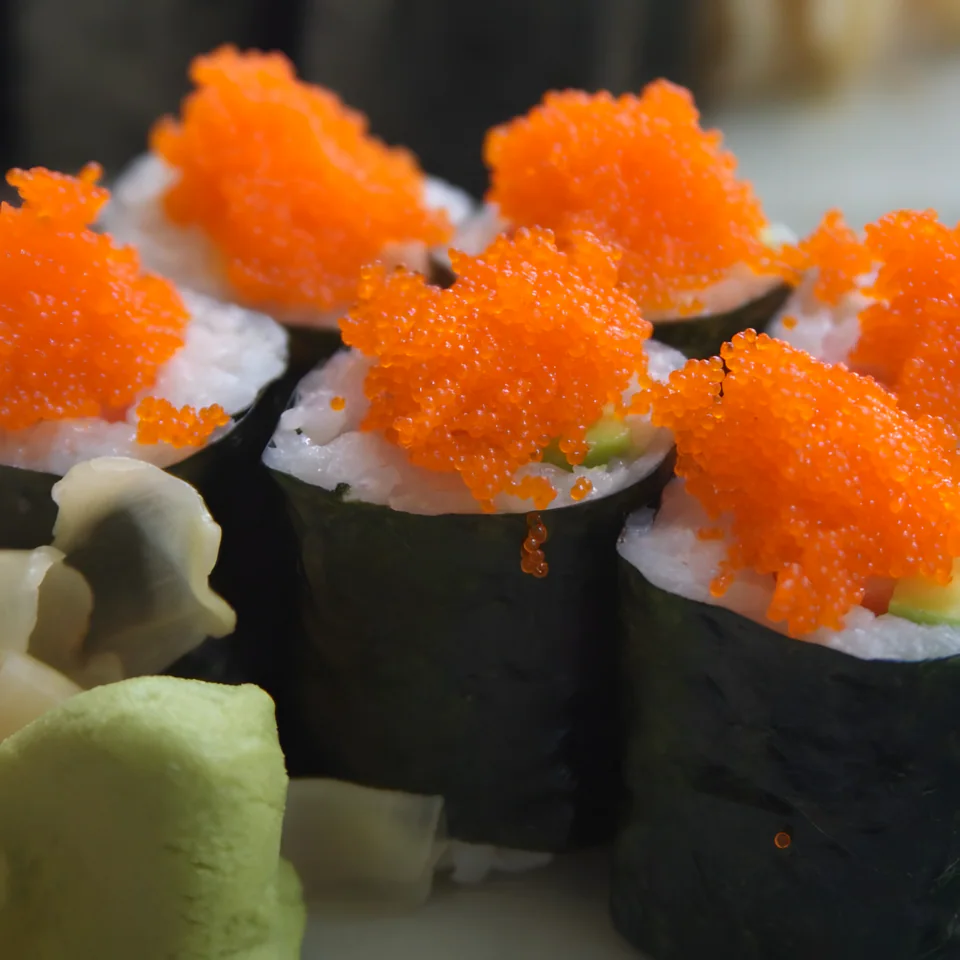
Sushi
 1 hr 5 min
Romanian · Gluten-free
Ciorba De Perisoare (Romanian Meatball Soup)
 50 min
Tunisian · Pescatarian
Tuna and Egg Briks
 1 hr 5 min
Japanese · Dairy-free
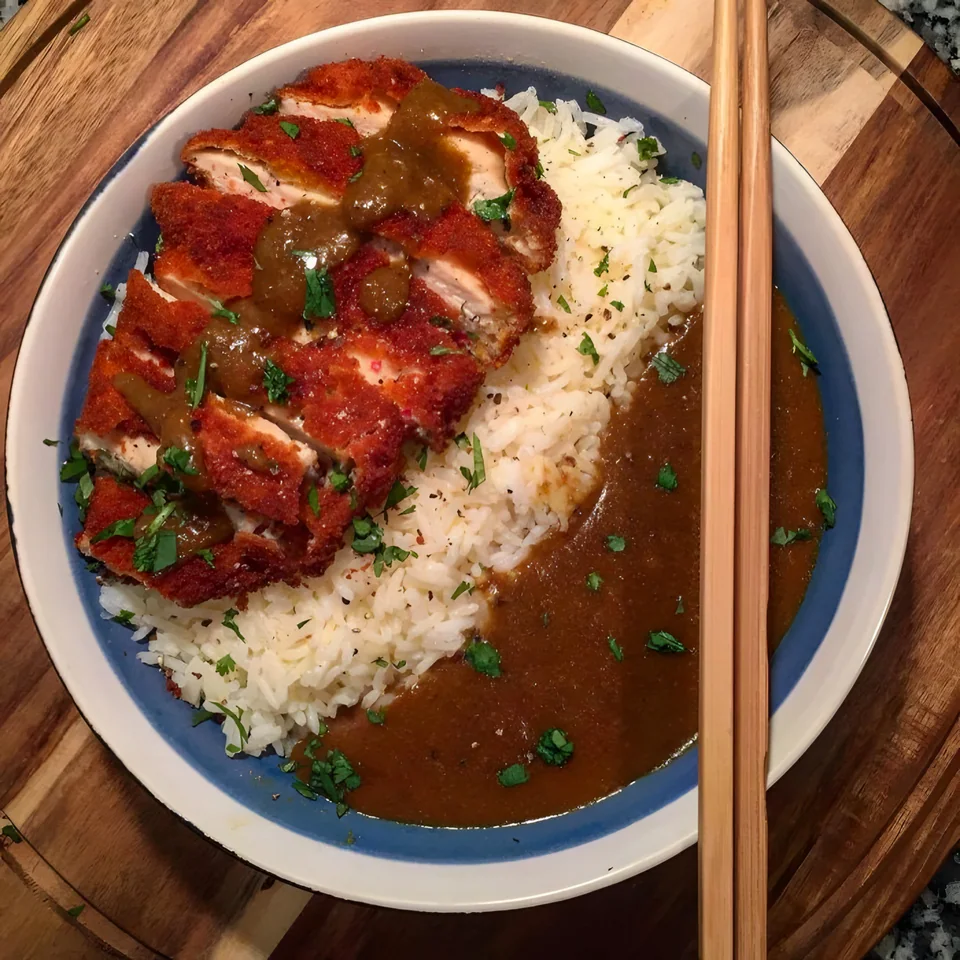
Chicken Katsu Curry
 1 hr 5 min
Malaysian · Gluten-free